Home pest problems are rarely random. Ants trailing across your kitchen counter, roaches hiding behind appliances, mice in the attic, or termites working through the crawl space — each one is responding to conditions that exist on your property. Food, moisture, shelter, and open entry points are what attract pests and keep them coming back.
We Bug Bugs Pest Control approaches residential pest control as an inspection-first service. Before we recommend any treatment, we want to understand the pest, the property, and the conditions driving the problem. That information determines what we treat, where we treat it, and what needs to change to help keep the problem from returning.

Most pest problems start outside. Ants nest in mulch and soil before finding their way to your kitchen. Rodents enter through foundation gaps and utility penetrations long before you hear them in the walls. Termites work through soil and build mud tubes over your foundation to reach the wood framing above.
Our residential inspections cover the exterior foundation and landscaping, entry points around doors and windows, utility penetrations, crawl spaces and attic access when needed, kitchens, bathrooms, and any interior areas where activity is visible or expected.
Once we know what we are dealing with and why it is there, we build a treatment plan that targets the pest at its source — not just the individuals you can see. For details on specific pest types, see our general pest control page, our rodent control page, or our termite control page.
Every pest is looking for the same things: food, water, and shelter. Homes provide all three. The conditions below are the most common drivers of residential pest activity. If several of these apply to your property, persistent pest problems are more likely — and recurring service is often more cost-effective than repeated one-time treatments.
Different areas of your home attract different types of pests. Understanding where activity tends to concentrate helps explain why a spot treatment at the kitchen counter often does not solve the problem.
Roaches hide behind refrigerators, under sinks, and inside cabinet hinges. Ants trail to grease, crumbs, and pet food. Drain flies breed in slow drains with organic buildup. These pests often originate outside and enter through foundation gaps or utility penetrations.
Silverfish, centipedes, and moisture ants are common in bathrooms with plumbing leaks or inadequate ventilation. High humidity and damp surfaces attract pests that need water to survive.
Termites build mud tubes along foundation walls to reach floor joists and sill plates. Rodents nest in insulation. Camel crickets, spiders, and centipedes inhabit damp, undisturbed areas. Regular inspections here catch problems early.
Rodents use roof lines, tree branches, and utility wires to reach attic vents and gaps around eaves. Stink bugs, cluster flies, and overwintering insects use attic spaces as warm shelter during fall and winter.
Garage door bottom seals are among the most common rodent entry points. Ants, spiders, and occasional invaders use garage gaps to enter attached living spaces. Stored items, pet food, and cardboard all provide harborage.
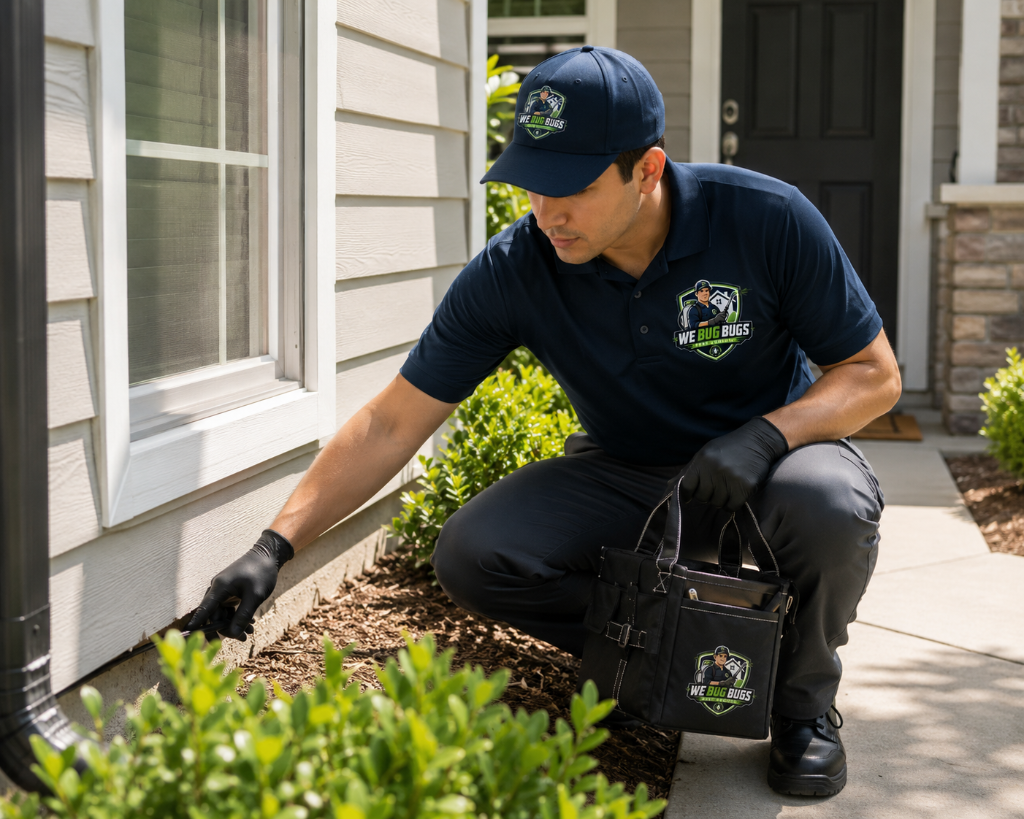
The foundation inspection reveals the most about a pest problem. Mud tubes, entry points, moisture-damaged wood, gaps around utilities, and harborage conditions are all visible from the outside when you know what to look for.
Every residential service follows the same sequence — inspect first, treat based on what we find, and give you the information you need to help prevent the problem from returning.
Exterior inspection — foundation, landscaping, entry points, drainage, and visible pest activity around the perimeter
Interior inspection of kitchens, bathrooms, basements, attics, and utility areas when pest activity is suspected
Pest species identification to select the right treatment approach — different pests respond to different products and methods
Entry point review — where are pests getting inside, and what structural conditions are allowing it
Targeted treatment applied to active areas, harborage zones, and pest pathways — not just baseboards
Moisture and sanitation recommendations — specific, practical changes that reduce the conditions supporting pest activity
Follow-up scheduling based on the pest type, severity, and your property's ongoing pressure level
Pest activity is not constant — it shifts with the seasons. Understanding what to expect at different times of year helps you catch problems early and decide when preventive treatment makes the most sense.
Ants and termite swarmers become active as the soil warms. Wasps begin establishing new nests. Spiders move indoors as prey insects become more abundant. Spring is an excellent time for a perimeter inspection after winter.
Mosquito, flea, and tick pressure peaks outdoors. Wasps and hornets reach maximum colony size. Roaches and ants are highly active inside with heat driving them toward air-conditioned structures and food sources.
Rodents — mice and rats — actively seek shelter as temperatures drop. Stink bugs, cluster flies, and boxelder bugs move into structures for overwintering. Fall exclusion work prevents a season’s worth of indoor activity.
Rodents remain active year-round inside structures. Roaches stay active in warm indoor environments. Bed bugs are unaffected by cold and continue to spread through luggage, furniture, and guests.
Professional pest control works best when combined with basic maintenance that reduces the conditions attracting pests. These steps do not replace treatment, but they significantly reduce how often treatment is needed.
For specific pest problems, see our pages on general pest control, bed bug treatment, rodent control, and termite control.
For most homes, quarterly pest control provides consistent protection against seasonal pest pressure. However, the right frequency depends on your pest history, property conditions, and location. Some homes do well with seasonal service while others benefit from monthly treatments — especially those near wooded areas or with a history of rodent or roach activity.
Tell us what you are seeing and where. We will inspect the property, identify the pest, and build a plan that addresses the source.