Stinging insects should not be disturbed without a plan. Wasps, hornets, and yellow jackets can become aggressive when their nest is threatened — especially around rooflines, wall voids, decks, and business entrances. We identify the species, locate the nest, and treat it safely.
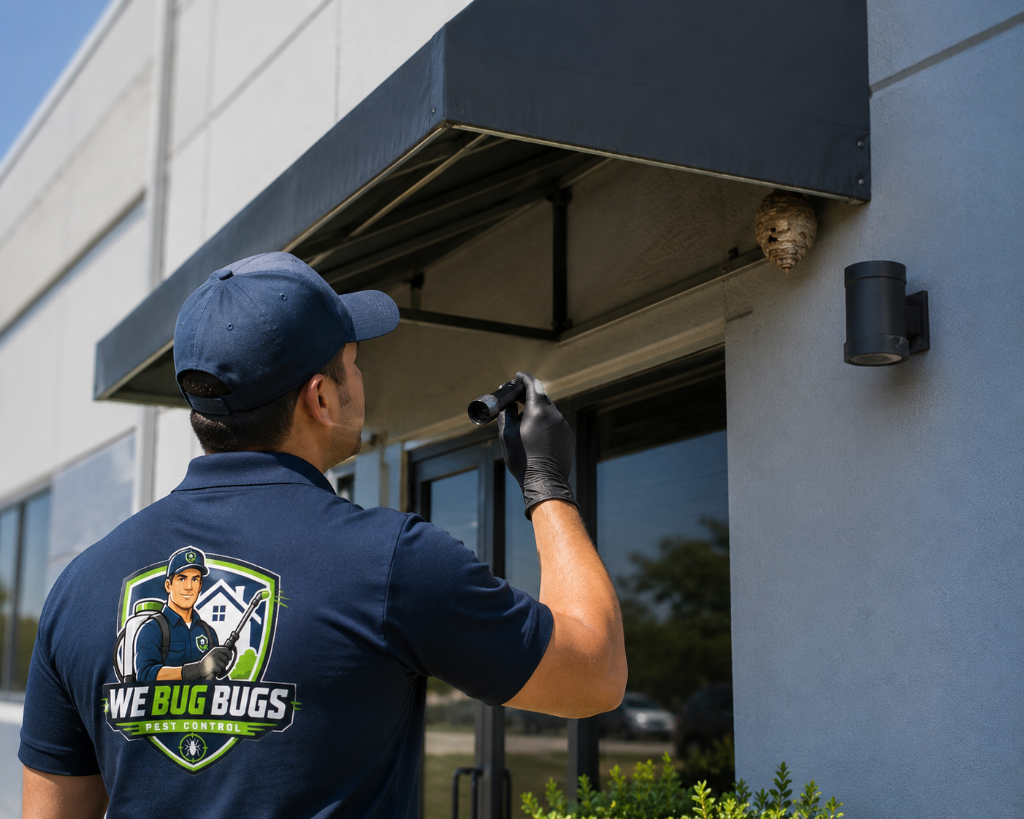
Wasps return to the same areas year after year because the structural conditions that made the spot attractive have not changed. Protected overhangs, warm south-facing walls, gaps in siding, accessible food sources, and sheltered nesting sites all invite new colonies each spring.
Identify the stinging insect species — wasps, hornets, yellow jackets, and mud daubers require different approaches
Locate the nest and assess risk based on location, size, and proximity to people
Treat the nest or entry point using appropriate methods for the species
Remove the nest when it is accessible and safe to do so
Recommend exclusion work to seal gaps that allow nesting in wall voids and soffits
If wasps or hornets are entering a wall void through a gap in the siding or soffit, sealing that entry point while the colony is still active can force the insects to find another exit — often into the interior of the home or business. Always treat the colony first. Once the nest is inactive, the entry point can be sealed to prevent future nesting.
Do not risk a sting. Let us identify the nest, treat it safely, and recommend how to prevent future nesting.
We Bug Bugs Pest Control serves homeowners and businesses throughout our local service area and nearby communities. Whether you are dealing with ants in the kitchen, roaches in a rental unit, rodents in the attic, termites near the foundation, mosquitoes in the yard, fleas or ticks around pets, or wasps near an entryway, we can inspect the issue and recommend the right treatment plan.