Termites can damage wood framing, sill plates, floor joists, and structural members before you ever see a sign of their presence. Professional termite inspection and treatment is the best defense against hidden structural damage.
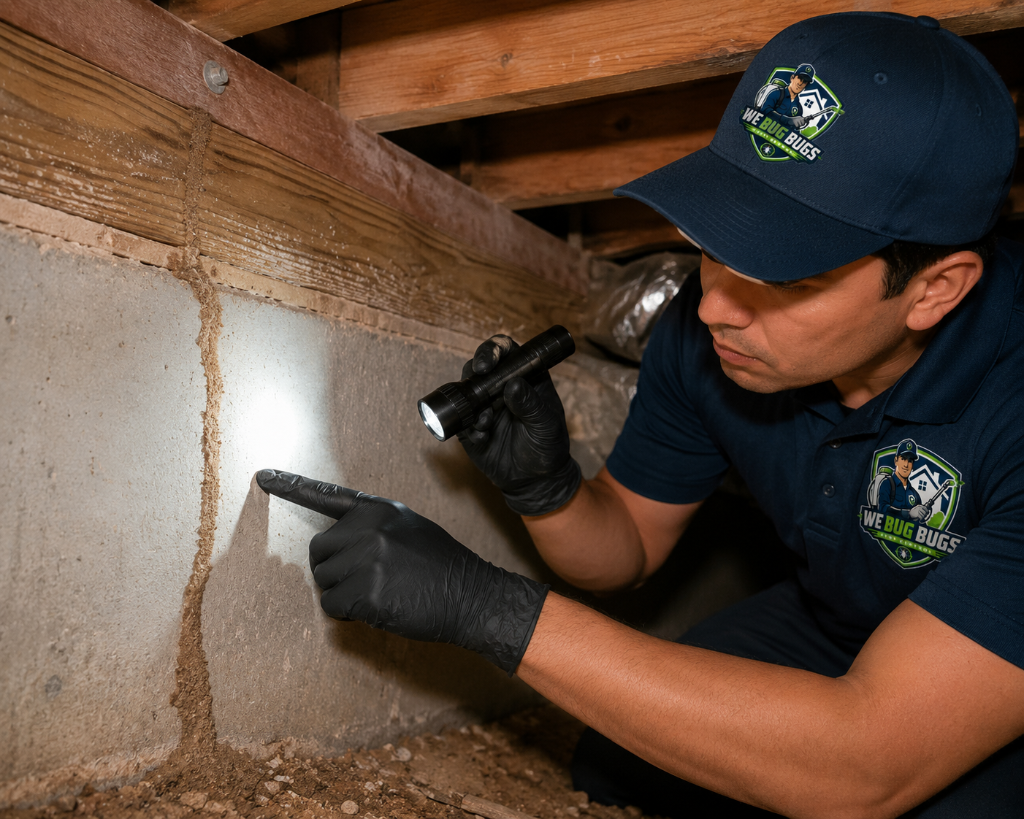
Subterranean termites work from the soil up, traveling through mud tubes they build over foundation walls and piers. They feed on wood from the inside out, leaving a thin outer shell that looks normal from the surface. By the time damage becomes visible — soft wood, sagging floors, peeling paint — the infestation has been active for months or longer.
That is why termite inspections are so important. They catch activity early, before the damage becomes expensive. Subterranean termites do not eat concrete, but they will build mud tubes over concrete foundation walls to reach the wood framing, sill plates, floor joists, and other cellulose material above.
Exterior inspection of the foundation, siding, trim, and landscaping contact points
Interior inspection of baseboards, door frames, window frames, and visible wood elements
Foundation review for mud tubes, cracks, and structural gaps
Moisture evaluation — leaks, drainage, crawl space humidity, and condensation
Wood-to-soil contact check around porches, decks, and support posts
Crawl space or basement inspection where accessible — sill plates, joists, and framing
Treatment recommendation based on findings — type, scope, and urgency
A liquid termiticide applied to the soil around the foundation creates a treated zone that termites cannot pass through without exposure. This is the most common approach for active infestations and preventive treatments.
Termite bait stations placed around the perimeter of the property intercept foraging termites and deliver a slow-acting material that is carried back to the colony. Baiting is effective for monitoring and long-term colony reduction.
When termite activity is found in a specific area, localized treatment targets that zone directly. This may be used in conjunction with a broader treatment plan or as a targeted response to isolated findings.
After treatment, monitoring helps confirm that activity has stopped and the treatment is holding. Annual inspections and condition corrections — reducing moisture, fixing wood-to-soil contact — are important parts of long-term termite prevention.
Control Moisture
Eliminate Wood Contact
Regular Inspections
Do not wait for visible damage. Let us inspect your property and catch termite activity before it becomes a costly repair.
We Bug Bugs Pest Control serves homeowners and businesses throughout our local service area and nearby communities. Whether you are dealing with ants in the kitchen, roaches in a rental unit, rodents in the attic, termites near the foundation, mosquitoes in the yard, fleas or ticks around pets, or wasps near an entryway, we can inspect the issue and recommend the right treatment plan.