A pest problem in a business is not just an inconvenience — it is a threat to your reputation, your regulatory standing, and your bottom line. A single customer complaint about a roach, a failed health inspection, or a rodent visible on a loading dock can create problems that take months to recover from.
We Bug Bugs Pest Control provides commercial pest management built around discreet service, detailed documentation, and programs designed for the specific risk profile of your business. Every commercial account starts with a site inspection, not a quote sheet.

Commercial pest problems rarely stay contained. A roach in a restaurant kitchen can be caught on a customer’s phone before staff even notice it. A rodent in a warehouse contaminates product and triggers liability. Flies in a food prep environment create health code violations that result in failed inspections, fines, and temporary closures.
For property managers, pest problems in one unit become problems in adjacent units. For hotels and hospitality, bed bugs create the kind of online reviews that are nearly impossible to bury. The cost of a pest problem is almost always higher than the cost of managing it properly.
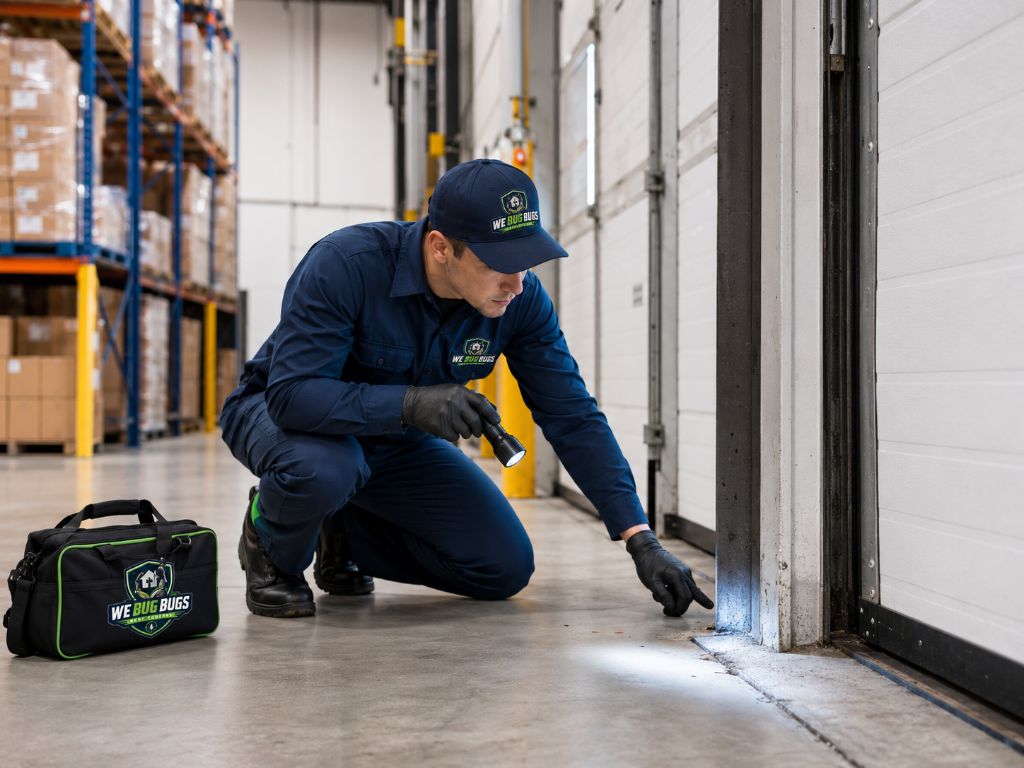
Each business type has a different pest risk profile. A restaurant faces different pressures than a warehouse. An apartment building has different challenges than a medical office. Our commercial programs are built around the specific conditions and requirements of each property type.
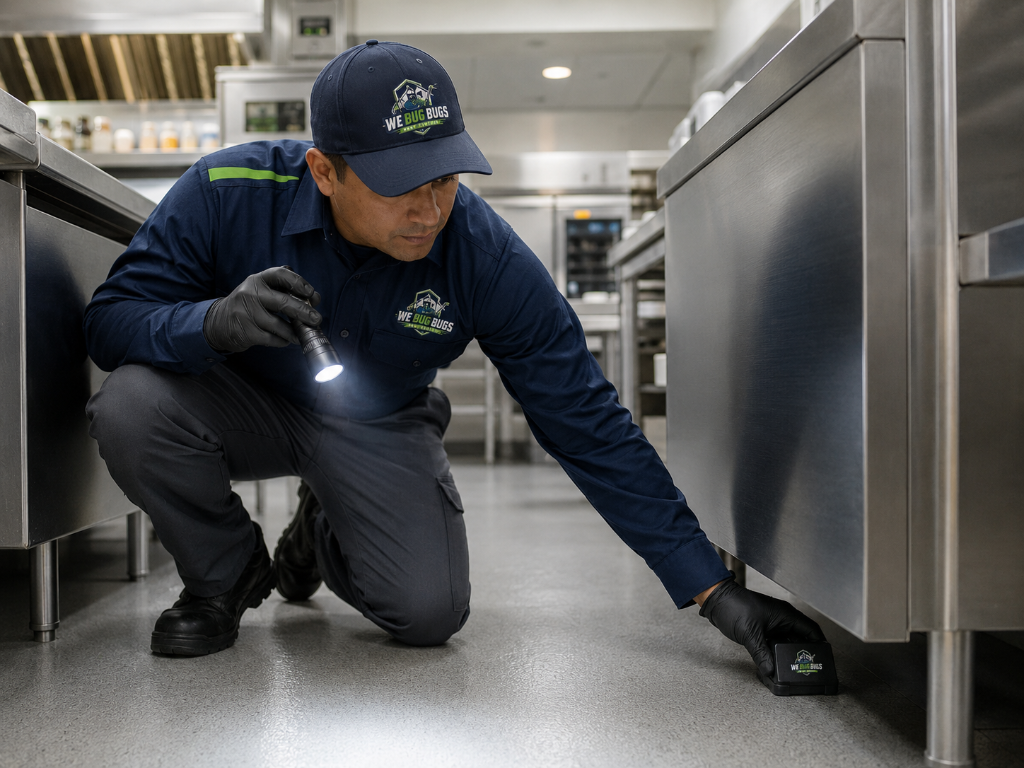
Commercial pest management requires a different approach than residential service. The structures are larger and have more entry points. Food handling operations require different product considerations. Regulatory requirements mean service must be documented. And the presence of employees and customers means timing and discretion matter.
We provide discreet service, work around your operating hours, place monitoring devices in sensitive areas, and maintain detailed records of every visit. Our commercial programs include scheduled inspections, not just reactive service — because catching a problem early is far less disruptive than responding to an infestation that has built up over months.
For food service clients specifically, we understand what health inspectors look for and build our service documentation to support your compliance record. For property managers, we coordinate unit access, track activity across the building, and provide the documentation tenants and lenders sometimes request. For more on specific pest types, see our pages on rodent control and general pest control.
Commercial pest problems tend to concentrate around high-risk zones within the property. Here is where we typically find activity and how we approach each one.
Commercial kitchens, dish areas, drains, grease traps, and breakrooms. German roaches reproduce rapidly and require crack-and-crevice treatment and baiting — not surface sprays that scatter them.
Storage rooms, loading docks, dumpster areas, utility rooms, and drop ceilings. Rodents follow pipe runs and utility lines throughout the building. Entry point identification is the key to control.
Breakrooms, trash areas, landscaping beds adjacent to the building, and entry doors. Ant species vary and require different treatment approaches — baiting, perimeter treatment, or both.
Drains, trash compactors, dumpsters, and food preparation surfaces. Drain flies breed in organic buildup inside slow drains. House flies breed in garbage and organic waste near entrances.
Commercial entrances, loading docks, outdoor seating areas, signage, and awnings. Customers and employees encounter stinging insects daily. Nest identification and treatment prevent dangerous interactions.
Hotels, multi-unit housing, and hospitality properties. Bed bugs spread through guest turnover and used furniture. Early detection and thorough treatment of affected rooms prevents building-wide spread.
Treatment alone is not enough in a commercial environment. Pests return to commercial properties because the conditions that attract them — food residue, moisture, accessible waste, and structural entry points — are difficult to fully eliminate in a working business.
Every commercial service visit includes specific sanitation and structural recommendations based on what we find. These may include drain maintenance practices, dumpster placement and cleaning schedules, food storage protocols, loading dock sealing, roof penetration caulking, and interior harborage reduction.
We document all recommendations in the service report so your management team has a clear record of what was found and what action is recommended. For questions about commercial pest control programs, contact us directly and describe your property type and current situation.
Drain Maintenance
Waste Management
Entry Point Sealing
Landscaping Control
Initial site inspection — interior and exterior — to identify pest activity, entry points, risk zones, and conditions specific to your property type
Risk-area mapping to identify high-priority zones including kitchens, loading areas, waste disposal, and moisture-prone locations
Monitoring device placement in sensitive areas to detect activity early and track population levels between visits
Targeted treatment selected based on pest species, building use, and regulatory requirements for the property type
Exclusion recommendations — specific structural gaps, door seals, utility penetrations, and access points that need to be addressed
Sanitation recommendations for food handling, storage practices, waste management, and drain maintenance
Detailed service report documenting findings, treatment applied, devices checked, and all recommendations made
Scheduled follow-up visits with consistent technician assignment when possible for familiarity with your property
Protect your business, employees, and customers with documented, professional pest management that works around your schedule.
We Bug Bugs Pest Control serves homeowners and businesses throughout our local service area and nearby communities. Whether you are dealing with ants in the kitchen, roaches in a rental unit, rodents in the attic, termites near the foundation, mosquitoes in the yard, fleas or ticks around pets, or wasps near an entryway, we can inspect the issue and recommend the right treatment plan.