Killing mice inside your home without finding how they got in is not rodent control — it is an ongoing catch-and-release program. We inspect for entry points, identify the rodent species, deploy strategic trapping or baiting, and recommend exclusion to close off access for good.
Long-term rodent control depends on finding entry points, food sources, nesting areas, travel routes, and sanitation issues. Without addressing these conditions, trapping alone becomes a never-ending cycle.
Mice and rats are creatures of habit. They follow the same pathways, use the same entry points, and return to the same food sources. Our job is to identify those patterns, eliminate the current population, and close off the access points that allowed them inside. Learn more about our residential and commercial pest control services.
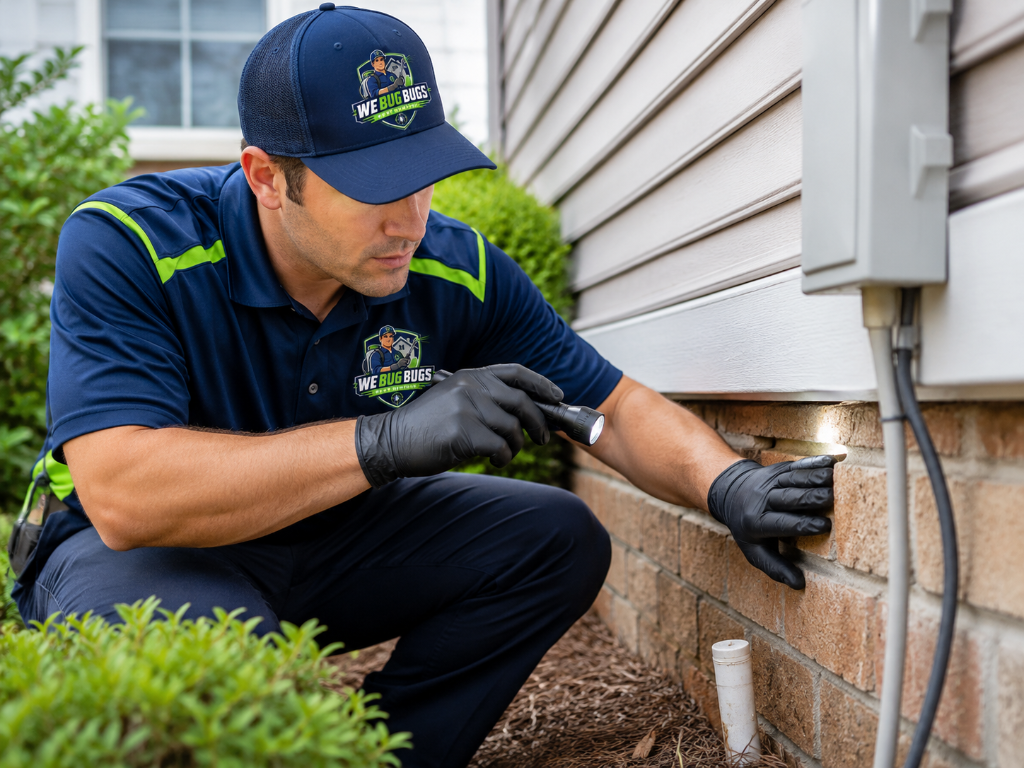
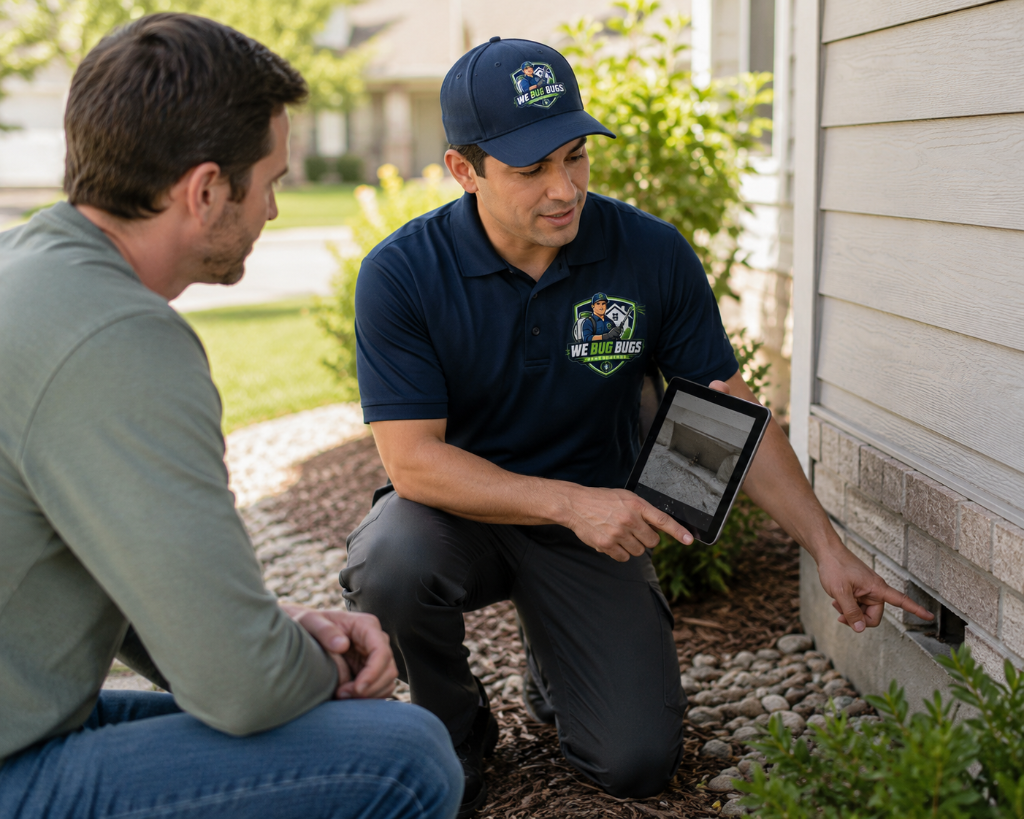
Thorough inspection of interior and exterior for signs of activity, entry points, and nesting
Identify whether you have mice, rats, or both — treatment strategies differ
Locate primary entry points around the foundation, roofline, garage, and utility penetrations
Deploy trapping or baiting strategy based on the species, location, and severity
Provide exclusion recommendations to seal gaps and close off access
Sanitation recommendations for food storage, garbage management, and clutter
Monitoring and follow-up to confirm activity has stopped and entry points are secure
Seal Entry Points
Secure Food & Waste
Trim Vegetation
Stop the cycle. Let us find how rodents are getting in and build a plan that solves it.
We Bug Bugs Pest Control serves homeowners and businesses throughout our local service area and nearby communities. Whether you are dealing with ants in the kitchen, roaches in a rental unit, rodents in the attic, termites near the foundation, mosquitoes in the yard, fleas or ticks around pets, or wasps near an entryway, we can inspect the issue and recommend the right treatment plan.